

Lyrics
Full credit
Every day you have to die some
Every day you have to cry some
For the room next door
All the good times past and gone 1
Found the party assembled on the landing
Wipe the tears from your eyes some 2

They found full credit in the bathroom
The presence was voluminous

Every day you have to die some
Every day you have to die some
Every day you have to cry some
All the good times past and gone
Commentary
Note: the lyrics in italics are spoken word contributions that slip in-between and sometimes overlap the lines that Mark E. Smith sings, and which seem to be a fragment of a parallel narrative. They are not easy to get a grip on, but I’m confident that the transcription is reasonably accurate.
“Mansion” is the first track on The Fall’s album, This Nation’s Saving Grace (1985), and “To Nkroachment: Yarbles” is the last track. The former, an instrumental version, is credited solely to Brix Smith, and the latter, with vocals, to both Brix and Mark E. Smith. Both are being a little bit cheeky, as noted below under “Sounds Like…?”
“Nkroachment” is probably an idiosyncratic spelling of “encroachment” – a noun defined by the Shorter Oxford English Dictionary as “the action or act of encroaching”. “Encroach” is defined as “seize; obtain wrongfully.” It may have the sense of “usurp” or “go beyond limits.” “Encroachment” can be a problem for home-owners in relation to property boundaries, and so it’s worth noting that This Nation’s Saving Grace includes two songs that refer to the house that Mark and Brix had bought together: “My New House” and “Paintwork” (and of course the instrumental version of “To Nkroachment: Yarbles” is “Mansion”). Property was a salient topic.
“Yarbles” is borrowed from “Nadsat“, the youth-culture slang that the Manchester-born Anthony Burgess (1917 – 1993) invented for his novel A Clockwork Orange (1962). According to the glossary included with most editions of the novel (but not the first), “Yarbles” means “testicles”.
In his introduction to the 1986 U.S. edition of A Clockwork Orange, Burgess called Nadsat “a Russified version of English… meant to muffle the raw response we expect from pornography. It turns the book into a linguistic adventure. People preferred the film because they are scared, rightly, of language.” (Burgess, 1986, pagination depends on edition, but it’s near the end of the introduction. Note that this edition restored the final 21st chapter which every previous American edition had excised from the novel. Burgess’ introduction has been included with most subsequent editions.).
Note that the name of Brix’s first band, Banda Dratsing (formed with her friend Lisa Feder), consists of two Nadsat words. According to Brix:
Our band needed a name. We toyed with The Rage, but settled on Banda Dratsing. ‘Banda’ and ‘Dratsing’ were two separate words in the made-up language Nadsat, taken from the book A Clockwork Orange, which we both loved. ‘Banda’ meant band, and ‘Dratsing’ meant fighting. Fighting Band.
Brix Smith Start, 2016, p.129.
Mansion
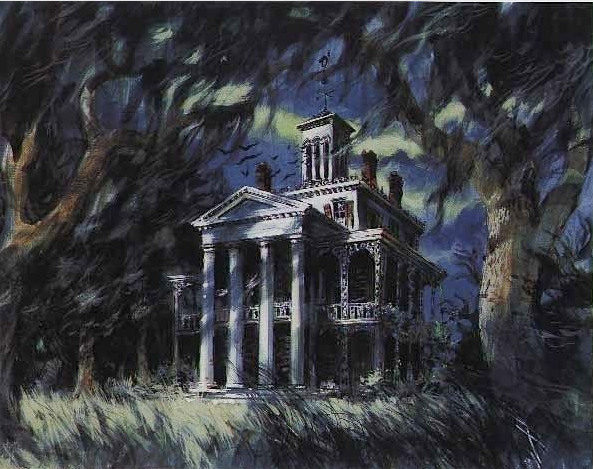
According to Brix, “Mansion… was supposed to evoke the creepy theme song to the haunted house at Disneyland” (Smith Start, 2016, p.208). Disneyland is the original Walt Disney theme park, opening in Anaheim, California, on 27 July 1955. The Haunted Mansion attraction opened on 16 August 1969.
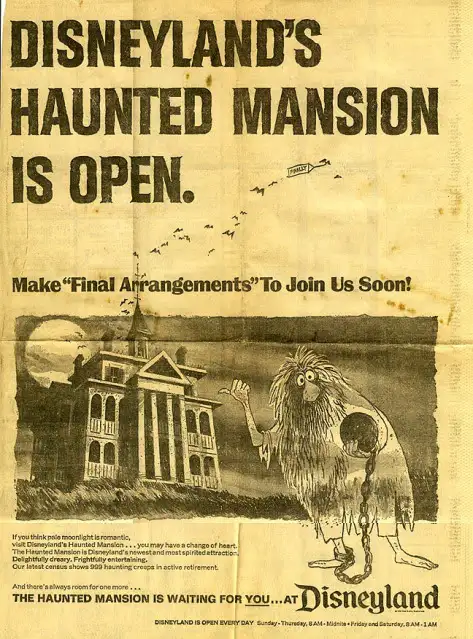
The Haunted Mansion‘s theme song is “Grim Grinning Ghosts” [see YouTube], which according to Wikipedia can be heard in different iterations throughout the ‘ride’. It doesn’t sound like “Mansion” (see “Sounds Like…?” below).
Some sounds from 1976 have been made available via the Long Forgotten blog, devoted to The Haunted Mansion, see the post “A 1976 Ride Through the Haunted Mansion” (posted 11 May 2010).
“Mansion” wasn’t ever played live in the 1980s (it was used as an intro tape), but (arguably) received a surprise debut at a gig at the Palác Akropolis, Prague, on 19 February 2002. It then opened every gig until the end of the year (or at least, all the gigs for which there is evidence of what was played). I say “arguably” because there is debate about whether it is indeed the instrumental “Mansion”, with just some opening M.E.S. ad-libs, or whether it constitutes a revival of “To Nkroachment: Yarbles”. The Track Record summarises the situation:
Whether the subsequent performances should be filed under Mansion or its sister song,To Nkroachment: Yarbles, is somewhat problematic to decide. The lyrics of the song didn’t usually reflect those of the latter track (one exception: – “Every night I have to play this song, good evening, we are The Fall”, in the gig on 20 February 2002, Szene, Vienna) and the delivery of the music was more reminiscent of the harder edge of the instrumental version of the track. Added to this, the handwritten set lists which exist from 2002 have the track entitled quite clearly as Mansion. However, the various DVD releases of gigs from this year have the track title of To Nkroachment: Yarbles…
The Track Record: “Mansion” [Link]
At the time of writing, I count three setlists reproduced at https://thefall.org/gigography/gig02.html, all of which do indeed plainly list “Mansion” first.
Sounds Like…?
As noted above, Brix has said that “Mansion”/”No Nkroachment: Yarbles” was based on, or at least inspired by, the Disneyland haunted house theme. Which may be right atmospherically, but the riff surely owes more to “Billy the Monster” by The Deviants and/or “The Light Hurts My Eyes” by The Great Scots.
The lyrics, meanwhile, quote from Lou Reed‘s “Home of the Brave”, from Legendary Hearts (1983):
Every day you have to die some
Cry some and die some
And every day you have to die some
Cry some and die
In the home of the brave
But Lou Reed was quoting “Every Day I Have to Cry”, written by Arthur Alexander (1940 – 1993) and first recorded by Steve Alaimo (1939 – 2024). Arthur Alexander subsequently recorded his own version, but the song has been multiply covered, with notable versions by Dusty Springfield and the Bee Gees.
Here’s the chorus:
Every day I have to cry some
Every day I have to cry some
Dry the water from my eyes some
Every day I have to cry
Support for the theory that Reed was quoting Arthur Alexander comes from two of Lou Reed’s biographers:
Reed ends the song quoting lyrics from the 1965 country-soul hit “Every Day I Have To Cry Some.”
Lou Reed: A Life, by Anthony DeCurtis (2017, p.438).
Lou even threw in a gloomy chorus of the Sixties soul standard by Arthur Alexander, ‘Every Day I Have To Cry’, to ram the message home.
Lou Reed: The Defining Years, by Peter Doggett (2012) [originally published as Growing Up in Public, 1992]
M.E.S. was evidently familiar with both the Lou Reed song and at least one version of Arthur Alexander’s composition (there’s no “die some” in the original, and no “dry the water from my eyes” in Lou Reed’s song, but M.E.S. sings both).
There’s a letter in the fanzine The Biggest Library Yet from Gary Young of Harrogate. He reports being taken aback at hearing the words to “To Nkroachment: Yarbles” on a friend’s Northern soul compilation:
Travelling by car to the 25th Anniversary of Wigan Casino, we were listening to a compilation tape of Northern Soul classics my mate had put together. We were amazed when all of a sudden, over a cranked up soul beat the words to TO NK ROACHMENT: YARBLES came blasting out of the speakers. I’d heard it said that this Fall number had ransacked a Dusty Springfield version of a song called EVERY DAY I HAVE TO CRY, but it transpires the version on my mates car stereo pre-dates this.
The original was by Steve Alaimo, and was released on the Checker label (thru’ Chess) – for the benefit of sad Fall anoraky obsessives vinyl copies of this record can be picked up for about a fiver at Northern Soul All-Nighters.
He goes on:
Prior to a recent Fall gig, I was fortunate enough to engage Mark E Smith in conversation and related the above story of discovery to him. “You bloody trainspotter!” he retorted. He’s right of course, but I know I’m not alone when it comes to matters appertaining to the Fall.
Young, 1999.
Careful though: this is not necessarily M.E.S. confirming definitively which version of the song was the origin of his lyrics.
Footnotes
- As discussed in this post, a chunk of the lyrics of this song are ultimately derived from a song written by Arthur Alexander. The line, “all the good times past and gone” is also likely borrowed. But, again, it’s not entirely clear which song it is borrowed from. There is the traditional folk/country song, recorded by hundreds of artists including The Monroe Brothers (“All the Good Times Are Passed and Gone”, 1937), Jimmy Martin And The Sunny Mountain Boys (“All the Good Times Are Past and Gone”, 1960), and the bluegrass duo Lester Flatt and Earl Scruggs (“Good Times Are Past And Gone”, 1962). The earliest known recorded version (with the title, “All The Good Times Are Passed And Gone”) was by Fred and Gertrude Gossett in 1930. Bobby Bare recorded the Howard Hausey (AKA Howard Crockett)-credited “All The Good Times Are Past And Gone” for his 1966 album Talk Me Some Sense. Crockett’s own version had appeared on Motown’s country-music label, Mel-o-dy Records, as “All The Good Times Are Gone” in 1965. Bare’s version has slightly different lyrics. More research is required to disentangle all of this. ↩︎
- Some transcriptions have “son” instead of “some”, but I think “some” fits with the other lines so I’m sticking with it. ↩︎
Sources / Links
- The Annotated Fall: “To Nk Roachment: Yarbles” [Archived]
- Burgess, Anthony (1986). “Introduction: A Clockwork Orange Resucked.” A Clockwork Orange. New York: W.W. Norton.
- DeCurtis, Anthony (2017). Lou Reed: A Life. London: John Murray / New York: Little, Brown and Company.
- Disney Parks Blog (2019). “Today in Disney History: Haunted Mansion Opening Date at Disneyland in 1969.” Posted 9 August 2019. [Archive]
- Doggett, Peter (2012). Lou Reed: The Defining Years. London: Omnibus Press.
- Ford, Simon (2003). Hip Priest: the story of Mark E Smith and The Fall. London: Quartet Books.
- Long Forgotten: Explorations of Disney’s Haunted Mansion [blog]
- Long Forgotten: Explorations of Disney’s Haunted Mansion (2010): “A 1976 Ride Through the Haunted Mansion.” [Archive]
- Mackay, Tommy (2018). 40 Odd Years of The Fall. Place of publication unknown: Greg Moodie.
- Pringle, Steve (2022). You Must Get Them All: The Fall on Record. [paperback edition]. Pontefract: Route Publishing Ltd. [Online store]
- Smith Start, Brix (2016). The Rise, The Fall, and The Rise. London: Faber & Faber. [Text available online in archive.org]
- The Track Record: “Mansion”
- The Track Record: “To Nkroachment: Yarbles”
- The Walt Disney Family Museum (2011): Blog: “The Long, Long Haunt: Artists of Walt’s Haunted Mansion”. Posted 31 October 2011. [Archive]
- Wikipedia: A Clockwork Orange (novel)
- Wikipedia: “Grim Grinning Ghosts” (Disneyland theme tune)
- Wikipedia: Nadsat
- Wikipedia: The Haunted Mansion (Disneyland)
- Young, Gary (1999). “Dear TBLY”, The Biggest Library Yet, #14 (January), p.8.