I'm searching for the now1 I'm looking for the real thing, yeah2
Head through a blue haze 3 Waiting for the musical craze We gotta taxi for Mr Nelson Taxi for Mr Nelson
Rebellious jukebox, yeah Rebellious jukebox, oh
No sounds at first came out This machine had dropped out But it played music to itself Made music for itself
Rebellious jukebox, yeah Rebellious jukebox, oh
I'm looking for the home of the real I want a happy time now
Drinkers from the slaughterhouse 4 Weren't happy and went out Noise resounds aloud Noise resounds the lounge 5
Rebellious jukebox, yeah Rebellious jukebox, oh
A shell-out from the fruit machine 6 This I was imagining Some drinkers dancing at the bar Drinkers dancing for the bar 7
Rebellious jukebox, yeah Rebellious jukebox, oh
I'm searching for the now I'm looking for the real thing, yeah
Commentary
Note: the lyrics in italics are sung by Martin Bramah.
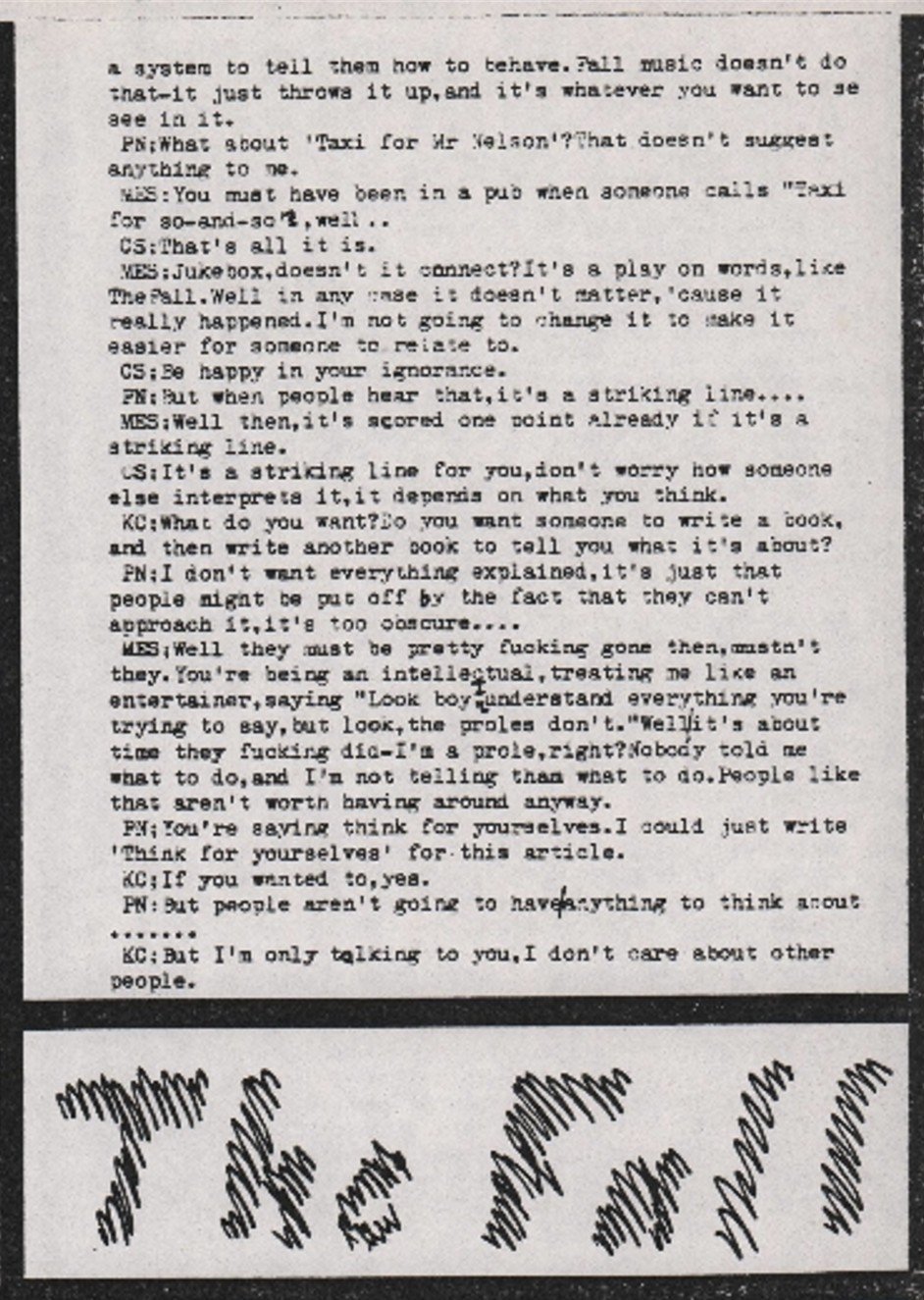
Printed Noises #4 (1980)
KC: If Mark gave you all the lyrics and told you all the stories, the five of us here would still interpret it differently. There’s no way you’re going to get a basic interpretation, so what’s the point of trying? Why do people have to know why that person is doing that thing? Is it so that that person can get on with living his life? They’re frightened of “Oh, it might be that or it might not be that..”. That’s what human beings are frightened of – they’re frightened of being themselves. They want a guide, they want a system to tell them how to behave. Fall music doesn’t do that – it just throws it up, and it’s whatever you want to see in it.
PN: What about ‘Taxi for Mr Nelson’? That doesn’t suggest anything to me.
MES: You must have been in a pub when someone calls “Taxi for so-and-so”?, well ..
CS: That’s all it is.
MES: Jukebox, doesn’t it connect? It’s a play on words, like The Fall. Well in any case it doesn’t matter, ’cause it really happened. I’m not going to change it to make it easier for someone to relate to.
CS: Be happy in your ignorance.
PN: But when people hear that, it’s a striking line….
MES: Well then, it’s scored one point already if it’s a striking line.
CS: It’s a striking line for you, don’t worry how someone else interprets it, it depends on what you think.
Interview with Mark E. Smith, Craig Scanlon and Kay Carroll by Martin and Simon Whale, Printed Noises, #4. No page numbering [p.4]
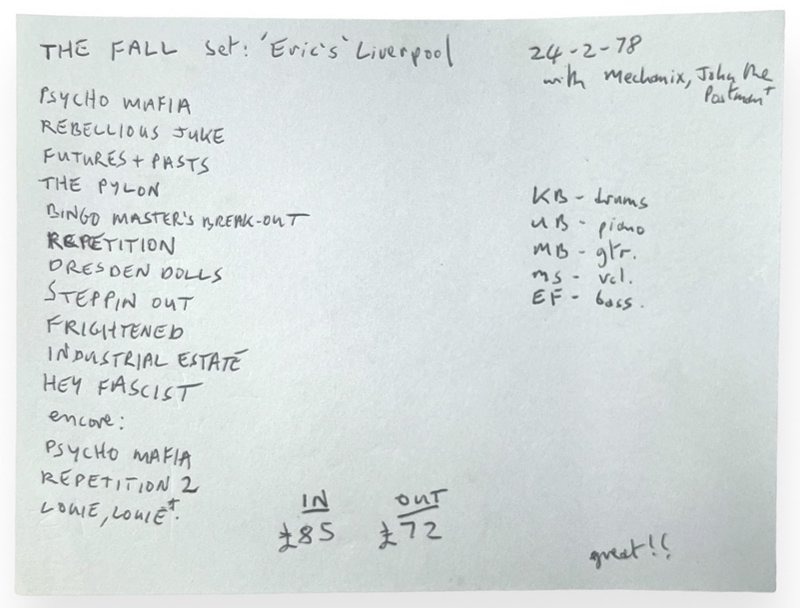
The earliest documented performance of “Rebellious Jukebox” was at Eric’s, Liverpool, 24 February 1978. It appears on the setlist as “Rebellious Juke”, which is how it was often – but not always – abbreviated.
Setlist: The Fall: Eric’s, Liverpool, 24 February 1978. Source: The Fall Online – Gigography: 1978. Originally offered for sale as Lot 445, from MES’ personal collection, Omega Auctions, 13 February 2024.
The song was first recorded for The Fall’s debut John Peel session, recorded on 30 May 1978 and broadcast on 15 June 1978. The version that appeared on Live at the Witch Trials was recorded on 15-16 December 1978 – it is this version that is transcribed above. On record, “Rebellious Jukebox” is credited to Smith/Bramah; in 1994 Smith told Melody Maker that it was “the first song I ever wrote on guitar.”
“Rebel Duke” is a song on House of All’s final album Inklings (2026).
The Reception of “Rebellious Jukebox”
“Wilton Jukebox”
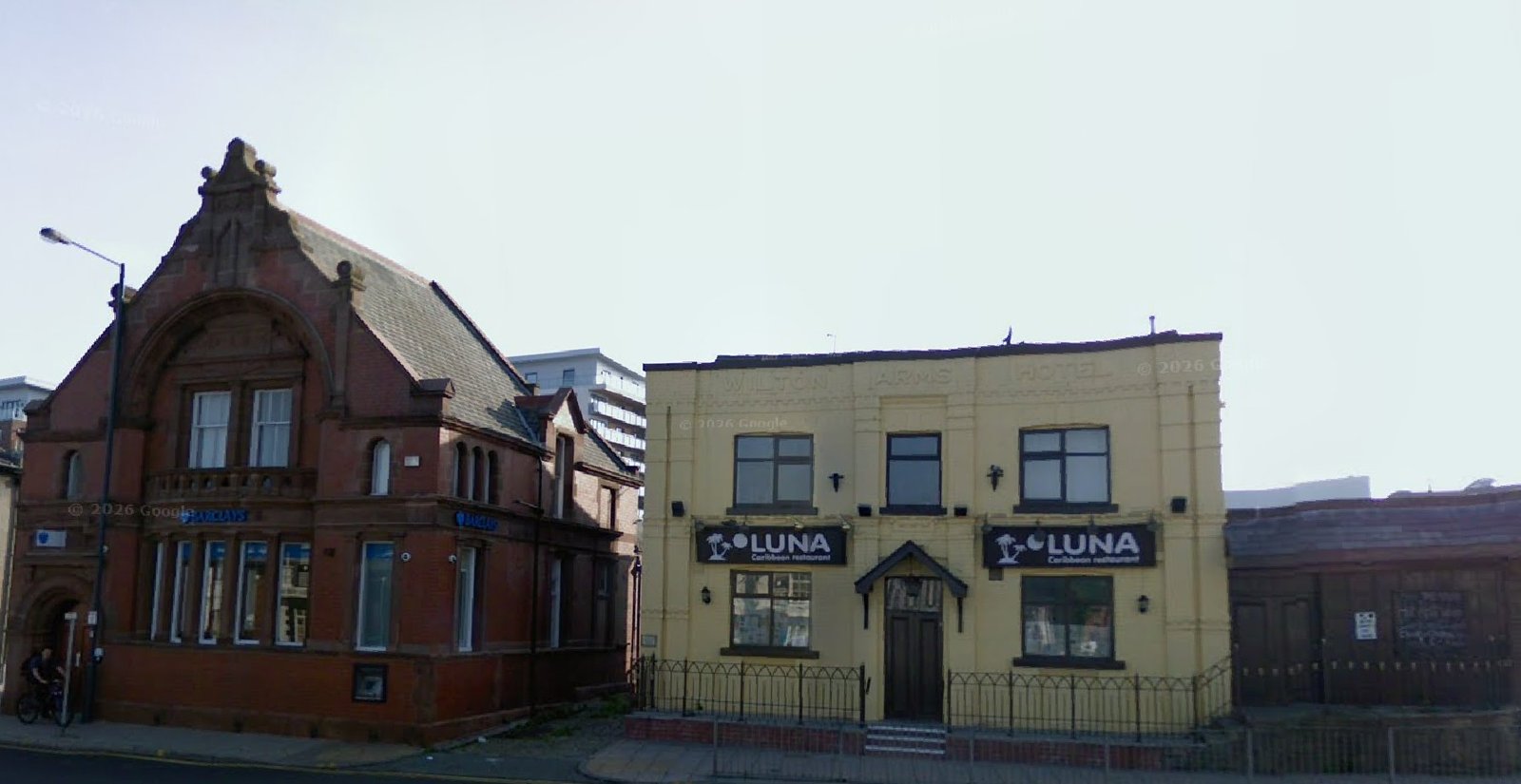
The Peel Session version of “Rebellious Jukebox” begins with Mark E. Smith’s spoken-word comment, “Wilton jukebox”. It’s not an uncommon pub name, but the most likely candidate is The Wilton, originally the Wilton Arms Hotel, which was at 458 Bury New Road. It was subsequently renamed The Priest’s Retreat and, after that closed, has mainly been home to a succession of restaurants. Most recently it was the Istanbul Grill (which shut down in 2026).
Presumably the song is based on, or inspired by, M.E.S.’s experiences of the pub, although of course it could be a composite of real and imagined locations and incidents.
The Wilton name is after the Egerton family, who owned the nearby Heaton Hall. Sir Thomas Grey Egerton was created the 1st Earl of Wilton in 1801. An earl is a couple of ranks below a duke, but in any case I haven’t identified a particularly rebellious Earl of Wilton.
Luna, formerly The Wilton Arms Hotel. Original pub name still visible. Source: Google Street View, July 2008.
When Brix’s band The Adult Net covered “Rebellious Jukebox” on the B-side of their 1985 single Incense and Peppermints, it was retitled “Searching for the Now”. ↩︎
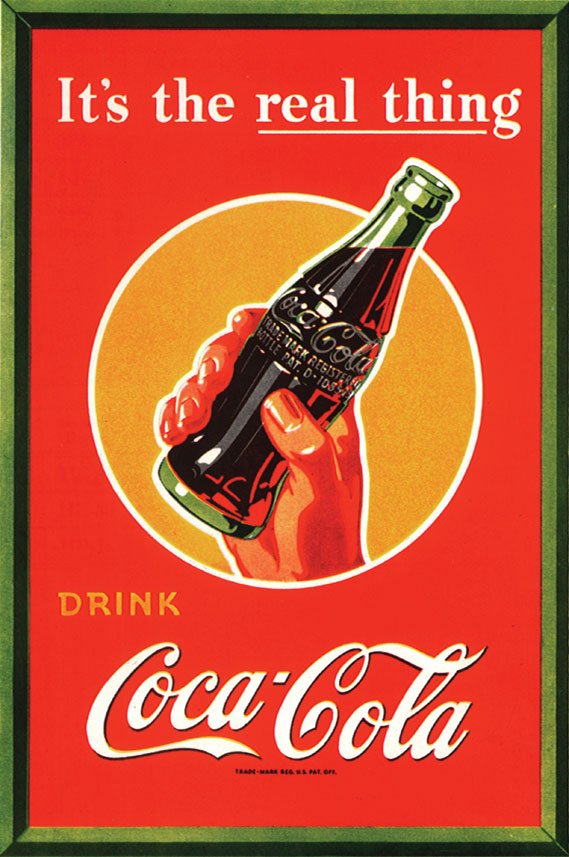
“It’s the real thing” is a Coca-Cola advertising slogan. I have no idea whether or not it the echo is deliberate.
The blue haze is cigarette smoke. Think it is unnecessary to point this out? Spare a thought for the legions of youngsters who regularly consult Annotating The Fall and who are unaware that there was once a time when pubs permitted smoking indoors. ↩︎
Probably the most natural interpretation of this line is that these are drinkers who work at a nearby abattoir. If so, the establishment has yet to be identified.
There are some alternative readings.
“The Slaughterhouse” is a nickname for the Butcher’s Arms Ground, home to Droylsden F.C. On Boxing Day 1977, Prestwich Heys A.F.C. played Cheshire League opponents Droylsden at their home ground of Adie Moran Park, about a 15 minute walk from The Wilton. Prestwich won 1 – 0. The “drinkers from the Slaughterhouse” might therefore be supporters of the away team. ↩︎
The “lounge” would be a separate room in a pub from the public bar. Traditionally the lounge would have more comfortable seating, tables and carpets whereas the public bar would have a hard floor and be designed for standing. Although pubs which have existed for any length of time will often still have the separate areas, perhaps either side of a central bar, they are no longer likely to have such rigidly demarcated zones. ↩︎
M.E.S. kind of swallows this line, so my rendering is far from certain. It was previously sometimes transcribed (including by The Annotated Fall @ doomby) as “I sidled up to a fruit machine”, but it just doesn’t sound like it. ↩︎
This probably means people dancing as they approach the bar, rather than dancing for the bar’s benefit in some way. I mean it probably isn’t intended to anthropomorphise the bar.
In British English, “bar” often means the counter at which drinks are sold (and perhaps consumed). However, some establishments which serve alcohol are also called bars – e.g. wine bars, cocktail bars, students’ union bars. More traditional pubs are not generally referred to as bars, though they probably come under the same umbrella. Thinking about it, I’m not sure there are hard and fast rules about nomenclature – it’s probably a marketing thing. ↩︎
Sources / Links
The Annotated Fall: “Rebellious Jukebox” [Archived]
Ford, Simon (2003). Hip Priest: the story of Mark E Smith and The Fall. London: Quartet Books.
Mackay, Tommy (2018). 40 Odd Years of The Fall. Place of publication unknown: Greg Moodie.
Martin and Whale, Simon (1980). “The Fall”. in Printed Noises, #4. No page numbering [pp.4-6].
Pringle, Steve (2022). You Must Get Them All: The Fall on Record. [paperback edition]. Pontefract: Route Publishing Ltd. [Online store]
Smith, Mark E. (1994). “Rebellious Jukebox”. Melody Maker. 2 July. p.13.
We are artistically independent, we refuse to merely entertain. “No sounds at first came out / This machine had dropped out / But it made music to itself / Made music for itself”: We The Fall are the Rebellious Jukebox. Instead of a normal jukebox that plays what the customers want to hear, we, the Rebellious Jukebox, play only what we want, regardless of who is listening or dancing. The Fall after all often felt they were playing for themselves to a confused audience. We are celebrating this isolation. True art is made for the creator not the consumer. “Drinkers from the slaughterhouse / Weren’t happy and went out / Noise resounds aloud / Noise resounds the lounge”: The tired, working-class audience come to us looking for simple escapism but they encounter our noise instead of a pretty tune, and so they leave unhappy. Like all great artists, we make abrasive art, when you are looking for a happy time.”I’m searching for the now / I’m looking for the real thing, yeah”: We mock the trendies looking for a musical craze, while we are looking for something authentic that exists outside of art. “I sidled up to a fruit machine / This I was imagining: / Some drinkers dancing at the bar”: I’m so alienated in this pub that I have to imagine people having a good time or dancing. I feel detached, like I’m an observer of a world I don’t feel I belong to, watching people interact with their machines (jukeboxes, fruit machines) rather than to each other.
“while we are looking for something authentic that exists outside of art” was supposed to be “outside of fashion” but I made a mistake. If you can correct that I would appreciate it. I’ll be more careful with future comments so I didn’t have to bother you.


 ↩︎
We are artistically independent, we refuse to merely entertain. “No sounds at first came out / This machine had dropped out / But it made music to itself / Made music for itself”: We The Fall are the Rebellious Jukebox. Instead of a normal jukebox that plays what the customers want to hear, we, the Rebellious Jukebox, play only what we want, regardless of who is listening or dancing. The Fall after all often felt they were playing for themselves to a confused audience. We are celebrating this isolation. True art is made for the creator not the consumer. “Drinkers from the slaughterhouse / Weren’t happy and went out / Noise resounds aloud / Noise resounds the lounge”: The tired, working-class audience come to us looking for simple escapism but they encounter our noise instead of a pretty tune, and so they leave unhappy. Like all great artists, we make abrasive art, when you are looking for a happy time.”I’m searching for the now / I’m looking for the real thing, yeah”: We mock the trendies looking for a musical craze, while we are looking for something authentic that exists outside of art. “I sidled up to a fruit machine / This I was imagining: / Some drinkers dancing at the bar”: I’m so alienated in this pub that I have to imagine people having a good time or dancing. I feel detached, like I’m an observer of a world I don’t feel I belong to, watching people interact with their machines (jukeboxes, fruit machines) rather than to each other.
“while we are looking for something authentic that exists outside of art” was supposed to be “outside of fashion” but I made a mistake. If you can correct that I would appreciate it. I’ll be more careful with future comments so I didn’t have to bother you.